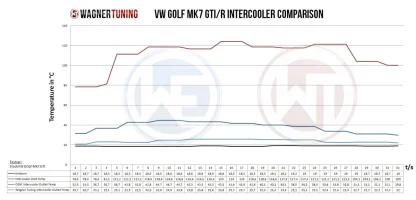
Thats one of their graphs, not the only one. They build intercoolers for multiple vehicles. But make another assumption on processes you don't understand because the brand isn't KIA on the otherwise scientific and related data
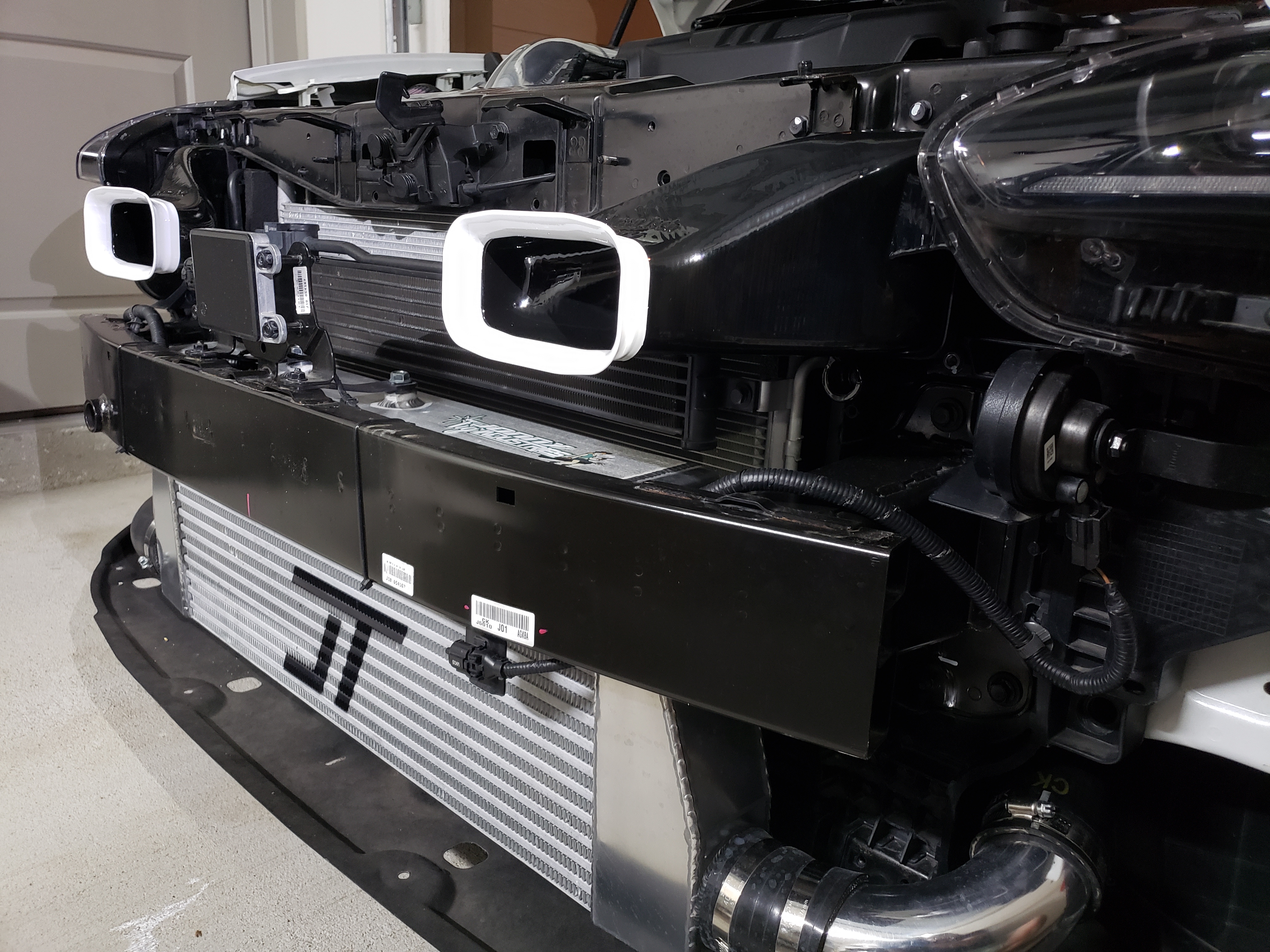
Again, designs go through various changes from the original design. You're making a gross assumption based on their decision to include a part initially and not later. Do you realize how effing stupid that sounds? If anything,the more intelligent assumption, based on the absence of the ducts, would suggest that testing the intercooler with and without the ducts showed no benefit to the ducts, or one that was so nominal that including them (and their costs both in production and sale) was pointless. This more intelligent assumption is further proven more likely after you combine your IAT variations, and the data shown on the Wagner intercooler graph I supplied. That being of course that the intercoolers exit IAT varied less than 2*C at anytime in the test, regardless of the 90*F + inlet temp changes. Not only that, but be cause the ducts aren't able to cool ambient temps, the air they would supply would not make a difference on IC outlet temps on the intercooler, as they come no where near 90*F+ in benefit to the inlet temp, but also because the intercoolers outlet temp was = to or only slightly higher than the ambient temp in the test. If you know what ambient temperature is, then you'll understand that the intercooler effectively lowered the 120*C IC inlet temps back down to the temperature of the air as it enters the ducts you're so hell bent on needing.