
2018 Audi A4 Ultra Premium vs. 2018 Honda Accord 2.0T Touring: Blurred Lines - Motor Trend
Who builds the better luxury family sedan?
Starting at $36,975, the A4 Ultra is one of the most inexpensive ways to get a luxury-brand family sedan in your garage.
Our tester added options such as gray paint for $575 (black or white paint are the only free colors) and the Convenience package, which adds keyless entry, a color instrument cluster display, and a few other features for $1,000. A handful of other goodies brought the as-tested price for our A4 to $39,110.
With a lower cost of entry and improved fuel economy being the reasons for the A4 Ultra’s existence, its engine makes less power than it does in other A4 trims, producing 190 hp and 236 lb-ft of torque (compared to 252 and 273 for the 2.0T Quattro lineup).
One of the worst things that can happen to a luxury car buyer, particularly one shopping on the lower end of the spectrum, is the obvious revelation to both you and others that you got “the cheap one.” Although some base luxury family sedans have some pretty obvious tells, the A4 Ultra hides its relatively affordable sticker price well. The A4 Ultra’s trim looks sharp, even with its slightly smaller wheels and Eastern Bloc apartment gray paint. From its LED signature headlights, down its sharply creased flanks, to its sequential taillights, everything about the A4 screams, “I’ve made it!”
Inside, the A4 makes a good first impression. “The design vibe is a smartphone on wheels,” executive editor Mark Rechtin said. Slip into the interior, and you’re greeted with real leather seats (though they are on the grainy and thin side), neat metallic-looking trim along the dashboard, and Audi’s MMI infotainment system mounted front and center atop the dash. The plastic switchgear feels soft and satiny to the touch, and the metallic-tipped HVAC controls and MMI knob feel cool to the touch and look pricey. The knobs turn and buttons press with a satisfyingly damped click.
“Audi does a superb job of using the interior design to mask the material selection,” associate editor Scott Evans said. “The design is hypermodern and looks premium, and the textured silver plastic stands in well for fake wood.”
But dig a bit deeper, and there is some disappointing decontenting to hit the price point—starting with the fancy tech Audi is most known for. With the cheaper trim package, the game-changing Virtual Cockpit is missing, as is any driver-assist technology. (Honda Sensing is standard on even the cheapest Accord.) . MMI is at least friendly with Apple CarPlay and Android Auto, which lessens the blow.
Some of the material choices are disappointing in a tactile sense. The armrests aren’t leather, and neither is the dash topper, which is a sort of squishy rubber. There’s also a lot of hard, unsatisfying plastics hiding below your beltline.
The material choices are pretty easy to overlook considering this A4’s sticker price, but the back seat isn’t. The lack of legroom means taller passengers will find themselves with their legs pressed up against a hard plastic seat back instead of softer surfaces found on higher-spec A4s. Cupholders are also conspicuously absent in back, though there are at least bottle holders in either door pocket. The Audi claws back a few points by offering up HVAC controls to rear-seat passengers.
- Focused on the A4 as wanted to highlight that Audi had to decontent (in both tech and materials) to hit a certain price-point.
There have been complaints about the level of material quality in some reviews of the Stinger, but think, overall, that those reviews have been unrealistic considering the Stinger's starting price-point.
While am a believer that all touch points should be soft and made of real materials (i.e. - metal looking door releases should be made of metal and not painted plastic), can kinda overlook the Stinger's mix of having real aluminum and painted plastic.
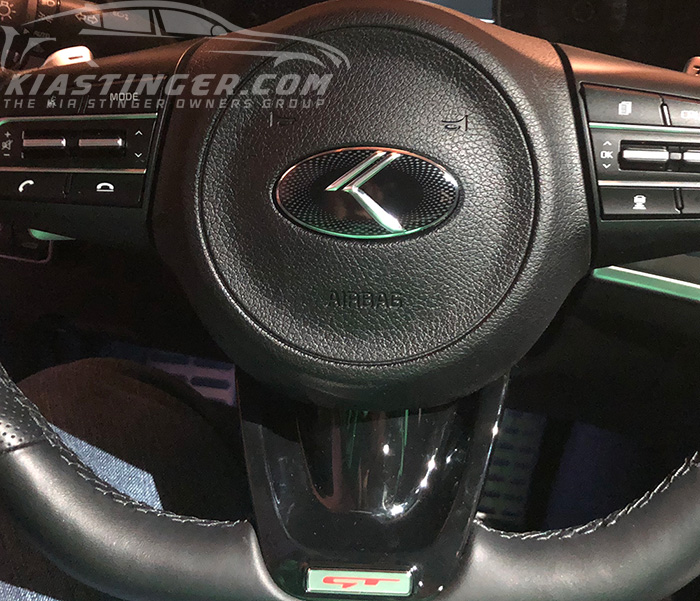
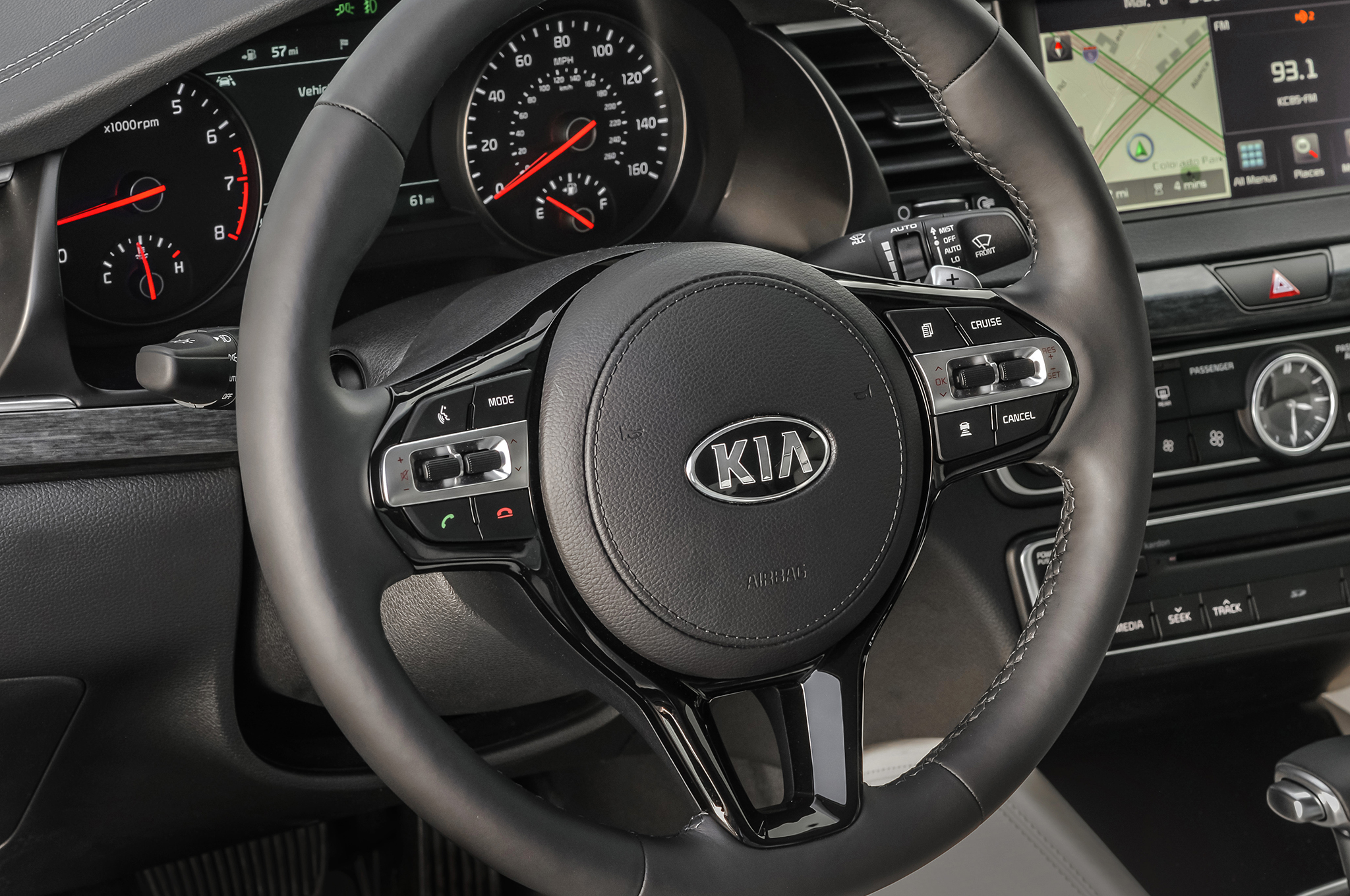
The one thing Kia needs to change, however, is the horribly cheap looking airbag/steering cover.
Drivers have that cheap thing staring them in the face.
Who builds the better luxury family sedan?
Starting at $36,975, the A4 Ultra is one of the most inexpensive ways to get a luxury-brand family sedan in your garage.
Our tester added options such as gray paint for $575 (black or white paint are the only free colors) and the Convenience package, which adds keyless entry, a color instrument cluster display, and a few other features for $1,000. A handful of other goodies brought the as-tested price for our A4 to $39,110.
With a lower cost of entry and improved fuel economy being the reasons for the A4 Ultra’s existence, its engine makes less power than it does in other A4 trims, producing 190 hp and 236 lb-ft of torque (compared to 252 and 273 for the 2.0T Quattro lineup).
One of the worst things that can happen to a luxury car buyer, particularly one shopping on the lower end of the spectrum, is the obvious revelation to both you and others that you got “the cheap one.” Although some base luxury family sedans have some pretty obvious tells, the A4 Ultra hides its relatively affordable sticker price well. The A4 Ultra’s trim looks sharp, even with its slightly smaller wheels and Eastern Bloc apartment gray paint. From its LED signature headlights, down its sharply creased flanks, to its sequential taillights, everything about the A4 screams, “I’ve made it!”
Inside, the A4 makes a good first impression. “The design vibe is a smartphone on wheels,” executive editor Mark Rechtin said. Slip into the interior, and you’re greeted with real leather seats (though they are on the grainy and thin side), neat metallic-looking trim along the dashboard, and Audi’s MMI infotainment system mounted front and center atop the dash. The plastic switchgear feels soft and satiny to the touch, and the metallic-tipped HVAC controls and MMI knob feel cool to the touch and look pricey. The knobs turn and buttons press with a satisfyingly damped click.
“Audi does a superb job of using the interior design to mask the material selection,” associate editor Scott Evans said. “The design is hypermodern and looks premium, and the textured silver plastic stands in well for fake wood.”
But dig a bit deeper, and there is some disappointing decontenting to hit the price point—starting with the fancy tech Audi is most known for. With the cheaper trim package, the game-changing Virtual Cockpit is missing, as is any driver-assist technology. (Honda Sensing is standard on even the cheapest Accord.) . MMI is at least friendly with Apple CarPlay and Android Auto, which lessens the blow.
Some of the material choices are disappointing in a tactile sense. The armrests aren’t leather, and neither is the dash topper, which is a sort of squishy rubber. There’s also a lot of hard, unsatisfying plastics hiding below your beltline.
The material choices are pretty easy to overlook considering this A4’s sticker price, but the back seat isn’t. The lack of legroom means taller passengers will find themselves with their legs pressed up against a hard plastic seat back instead of softer surfaces found on higher-spec A4s. Cupholders are also conspicuously absent in back, though there are at least bottle holders in either door pocket. The Audi claws back a few points by offering up HVAC controls to rear-seat passengers.
- Focused on the A4 as wanted to highlight that Audi had to decontent (in both tech and materials) to hit a certain price-point.
There have been complaints about the level of material quality in some reviews of the Stinger, but think, overall, that those reviews have been unrealistic considering the Stinger's starting price-point.
While am a believer that all touch points should be soft and made of real materials (i.e. - metal looking door releases should be made of metal and not painted plastic), can kinda overlook the Stinger's mix of having real aluminum and painted plastic.
The one thing Kia needs to change, however, is the horribly cheap looking airbag/steering cover.
Drivers have that cheap thing staring them in the face.
Last edited:





 )
)